

You’ll want a clear answer before diving into legends and speculation, so start with this: the historical Bavarian Illuminati was a short-lived Enlightenment-era secret society, not a global shadow government, while modern claims of its worldwide control mix symbolism, coincidence, and misinterpretation rather than verified, coordinated power.
They can trace influence to real 18th-century figures and ideas about reason and reform, which helps explain why the name persists. Exploring the group’s origins, how myths grew, and why the idea sticks will show how facts and fantasies became entangled.
As you move through the article, expect a mix of documented history, common conspiracy patterns, and examples of how pop culture keeps the myth alive — all aimed at separating evidence from exaggeration so you can judge how much of the story is credible.
Origins and History of the Illuminati
The group formed as a short-lived Enlightenment-era secret society in late 18th-century Bavaria, aiming to promote rationalism, secular governance, and moral reform. Its membership, internal ranks, suppression by Bavaria, and later mythologizing by opponents shaped modern conspiracy lore.
The Founding of the Bavarian Illuminati
Adam Weishaupt, a professor of canon law at the University of Ingolstadt, founded the Order of the Illuminati on May 1, 1776. He originally named it the Bund der Perfektibilisten (League of the Perfectible) and later adopted “Illuminati” and the grade system beginning with Novice and Minerval levels to structure initiation and instruction.
Weishaupt recruited from Masonic lodges to reach intellectuals and bureaucrats, seeking to replace clerical and aristocratic power with enlightened civic virtue. The group emphasized secrecy, coded correspondence, and the use of pseudonyms; members included academics, civil servants, and cultural figures. Weishaupt modeled rituals on Masonic and Rosicrucian practices while stressing anti-clericalism and secular education.
Structure, Membership, and Key Figures
The Illuminati organized into graded degrees: Novice, Minerval, and higher philosophical and administrative levels governed by chiefs and a central conclave. Johann Joachim Christoph Bode and Adolph Freiherr Knigge played major roles in expanding recruitment, formalizing rituals, and integrating the order with German Masonic networks.
Prominent contacts included writers and intellectuals such as Johann Wolfgang von Goethe at the periphery, though Goethe’s exact involvement remains limited. Membership lists show municipal officials, university figures, and lodge members rather than an international cabal. The Owl of Minerva became a symbolic emblem; internal correspondence reveals practical aims—education reform, curbing clerical influence, and promoting Enlightenment values—rather than global domination.
The Suppression and Dissolution
Bavarian authorities, alarmed by secret networks and anti-clerical ideas, issued edicts in 1784–1785 ordering the disbandment of the society. The government searched homes, seized letters, and prosecuted members; many documents were published, fueling the scandal. Charles Theodore, Elector of Bavaria, and the Bavarian government enforced the ban, outlawing secret societies and placing members under surveillance.
The official suppression fractured the organization and dispersed members into other intellectual circles, Masonic lodges, and exile. Weishaupt fled and later lived under assumed names; the order ceased formal operations by the late 1780s. Contemporary reports by enemies like Augustin Barruel and later conspiracists exaggerated the group’s continuity and reach, turning a dissolved Bavarian network into a persistent myth.
Influence of the Enlightenment and Secret Societies
The Illuminati drew directly from Enlightenment ideas: reason, secularism, and civic morality. It interacted with Freemasonry—especially lodges in Ingolstadt, Prussia, and other German states—adopting lodge structures while criticizing Masonic elitism and certain mystical rites like the Rite of Strict Observance and claims of Scottish knight lineages.
Earlier movements, such as the Rosicrucians and Iberian Alumbrados, provided ritual precedents for secrecy and inner reform. The Jesuits and Catholic Church featured as ideological opponents; anti-Jesuit sentiment helped attract converts. The group’s focus on education, recruitment through networks, and opposition to clerical privilege reflected broader Enlightenment currents rather than a unique, transnational conspiracy.
The Illuminati: Myths, Conspiracy Theories, and Modern Impact
The text examines how the Bavarian Illuminati became a focal point for diverse conspiracies, how symbols like the All‑Seeing Eye entered mass media, and why these stories persist despite weak evidence.
Emergence and Spread of Illuminati Conspiracy Theories
The historical Bavarian Illuminati was formed in 1776 under Adam Weishaupt and aimed to promote Enlightenment ideals and reduce clerical influence. It disbanded by the 1780s after government suppression, but writers later exaggerated its scope.
John Robison’s 1797 Proofs of a Conspiracy and Abbé Barruel’s earlier tracts linked the Illuminati to the French Revolution, creating a template that associates secret societies with political upheaval. Those claims mixed fact, rumor, and anti‑revolutionary fear and traveled widely in pamphlets and later books.
19th– and 20th‑century occultists and anti‑Semitic movements adapted the Illuminati theme, merging it with Freemasons and Western esotericism. In the 20th–21st centuries, pamphlets, talk radio, and the internet accelerated memetic spread, turning a short‑lived group into a catchall for explanations of global events.
Illuminati in Popular Culture and Symbolism
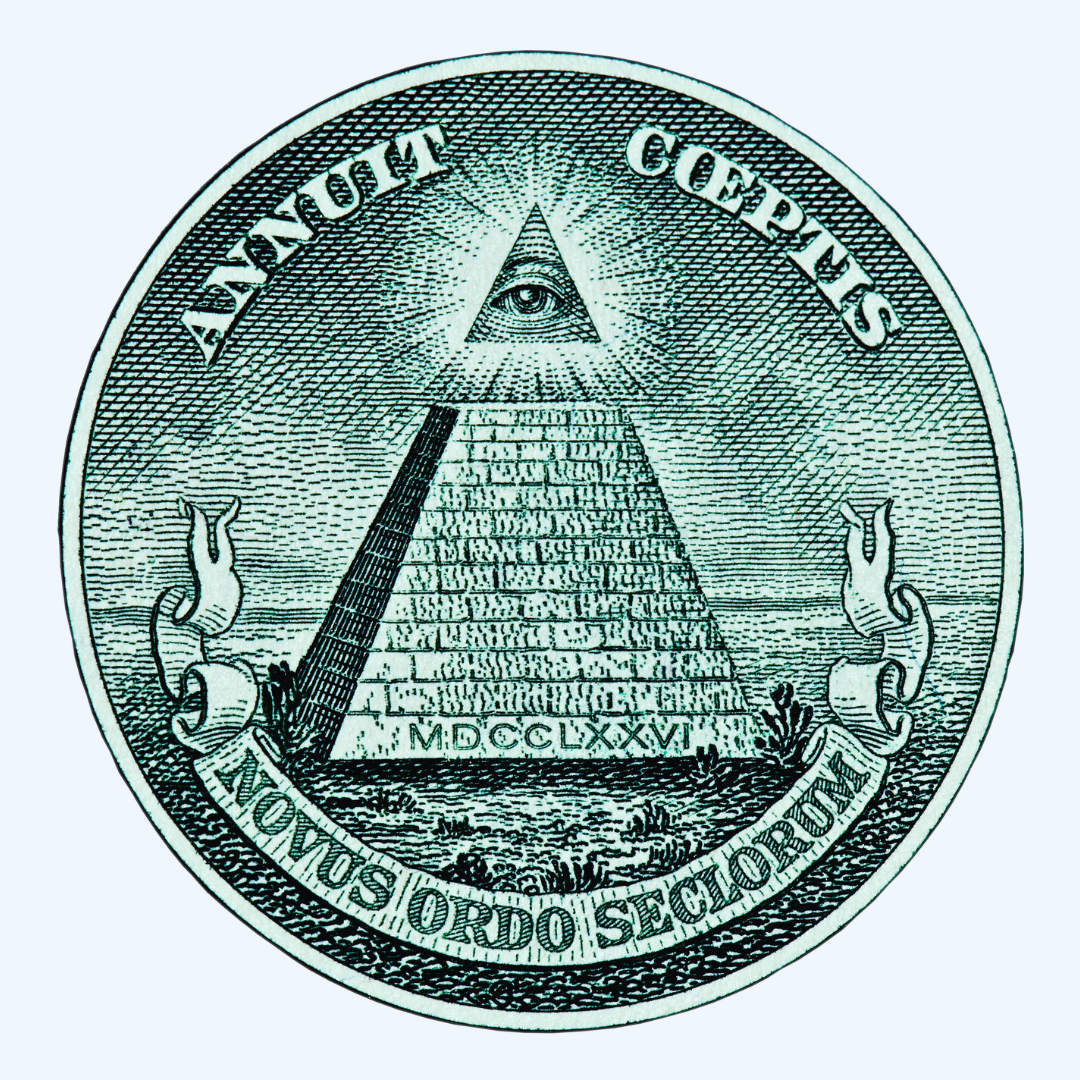
Popular culture amplified supposed Illuminati symbols: the All‑Seeing Eye (Eye of Providence), pentagrams, and triangular imagery became shorthand for hidden control. The Eye of Providence predates the modern myth and appears on Masonic regalia and the U.S. one‑dollar bill, but its use does not prove conspiratorial coordination.
Fiction works such as the Illuminatus! The trilogy by Robert Anton Wilson energized modern mythmaking by blending satire, occult motifs, and paranoia. Musicians and celebrities—Jay‑Z and Beyoncé among them—have been repeatedly linked to Illuminati imagery through stage visuals and marketing, though those links are often intentional publicity or misread symbolism.
Film, television, and video games borrow the iconography to evoke mystery, which reinforces the public association between symbols and secret power. Conferences like Bilderberg get folded into the narrative because closed‑door elite gatherings fit the pattern conspiracists expect, even when no centralized world‑control plan appears.
Debunking Myths and Evaluating Evidence
Serious historical research finds no credible evidence that the Bavarian Illuminati survived as a global power or orchestrated world events. Primary documents show limited membership and local aims; later claims rely on hearsay, forged documents, or erroneous inference.
Critical thinking tools—source evaluation, chain‑of‑custody for documents, and Occam’s razor—help dismantle many specific claims. For example, linking a celebrity’s use of a triangle on album art to global governance requires a chain of planned coordination for which no reliable documents or whistleblowers exist.
Scholars distinguish between symbolic coincidence and organizational continuity. Conflating Freemasonry, Western esotericism, and popular symbols creates convincing stories but not proof. Where researchers find secretive meetings (e.g., Bilderberg), they note influence through networking, not monolithic world government.
The Enduring Legacy: Why Illuminati Theories Persist
Illuminati theories persist because they offer simple explanations for complex social and economic trends, satisfy narrative instincts, and provide a target for political or cultural anxieties. People facing globalization, income inequality, and rapid cultural change often prefer a visible antagonist.
Cognitive biases—pattern‑seeking, proportionality bias, and confirmation bias—fuel the spread and maintenance of conspiratorial beliefs. Social media algorithms and celebrity gossip magnify isolated coincidences into apparent patterns, reinforcing group identity among believers.
Cultural products and political rhetoric keep the myth alive by repurposing symbols and stories for entertainment or persuasion. Addressing the persistence requires improving media literacy, teaching critical thinking, and distinguishing documented historical facts from speculative storytelling.